Delay a Shot? Skip One? Vaccine-Dosing Messaging Is a Nightmare.
Vaccine regimens need both science and public trust to succeed.
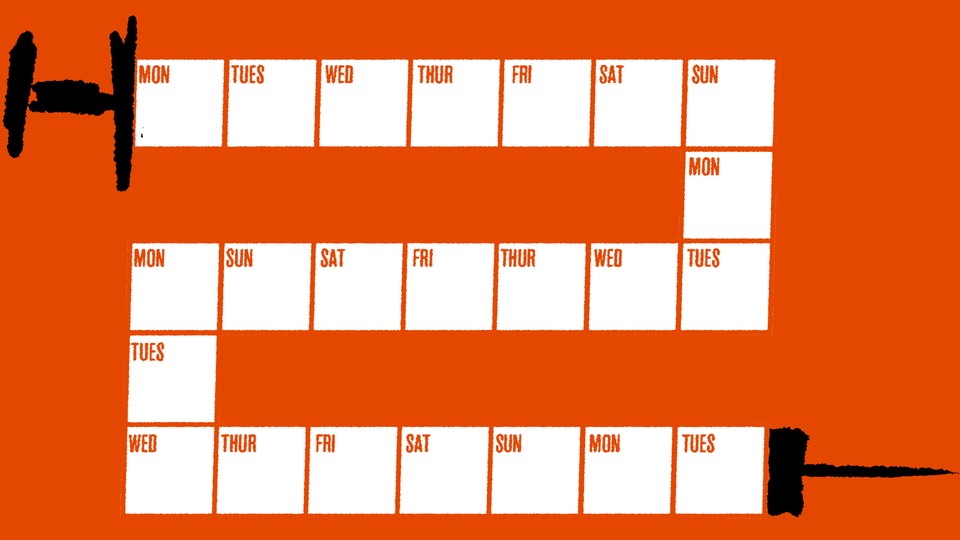
The debates began as 2020 ended and the first vaccines were headed toward authorization. Skip the second dose, some researchers proposed—just one prick of the Pfizer-BioNTech or the Moderna formulation might be enough to do the trick. Jab No. 2 is crucial, others parried, but perhaps it can be postponed longer than the prescribed three or four weeks. No need to screw with the schedule, still others insisted, if the amount of vaccine in each inoculation gets cut in half.
The details varied, but the common thread was clear: To combat the limitations of vaccine supply, these controversial proposals suggested, we should stretch the resources we’ve got.
The two vaccines now cleared for emergency use in the United States, made by Pfizer-BioNTech and Moderna, respectively, were explicitly green-lit as two-dose regimens on strict schedules. But as new coronavirus variants hopscotch across the globe, and scattered reports indicate that some survivors of COVID-19 may be vulnerable to reinfection, support for tweaking the original playbook has grown. Several leading scientists have, in recent weeks, started to argue that front-loading injections—whether by adjusting the dose schedule or the doses themselves—will more quickly disseminate the partial protection afforded by a single shot. Officials in the United Kingdom are already employing such strategies for the Pfizer vaccine and another, made by AstraZeneca.
Some immunological data, and historical precedent, support these types of adjustments, and more might yet emerge. Science is not a game for the dogmatic: Evidence evolves, and our first attempts at designing and doling out coronavirus vaccines certainly won’t be our last. But the details of vaccine distribution have never been a solely scientific decision—not by a long shot. In the absence of public trust, even an immunologically ideal vaccine-dosing regimen won’t be the one that protects the most people.
“As a scientist, I’m delighted to hear that [other scientists are] working continually to improve the recommendations on this very important issue,” Stacy Wood, a marketing expert at North Carolina State University who studies how consumers respond to new products, told me. “But as a marketer who is working to try and persuade the vaccine-hesitant, I’m watching my task become that much harder.”
All vaccines are designed as teaching tools for the body: an intro course that parades faux or harmless bits of a virus or other pathogen in front of immune cells, so they can learn how to thwart the real thing. Second shots, although not always necessary, are meant to upgrade and prolong that protection. If the first dose is Pathogen 101, the second is an intensive review session to advance the body’s knowledge and ensure that the virus has been committed to long-term memory. In clinical trials, the Moderna and Pfizer vaccines triggered larger antibody responses the second time they were administered—a strong suggestion that they’d bolstered the body’s defenses against the coronavirus. Pfizer’s dosing schedule requires three weeks between shots; Moderna’s, four.
Immunity, however, is a spectrum, not a binary. Several experts have pointed out that data from both companies’ trials suggest that some protection kicks in after the first injection. Though the efficacy of a single dose wasn’t rigorously tested, one might be enough to curb the effects of the coronavirus on an otherwise vulnerable population, some argued—akin, perhaps, to driving with a single headlight, or tearing life jackets in two. At the very least, people could stand to wait longer for their second dose, some said, maybe up to a few months after their first.
The dose-delay idea rapidly gained proponents—as well as some very vocal critics, many of whom pointed out that clinical trials weren’t set up to determine exactly how much protection the first dose offers, or how long it might last. If a second dose is delivered too late, they argued, the immune system might have forgotten its first encounter with the vaccine, essentially wasting a shot. Others warned that saddling a whole population of people with only partial protection could encourage the coronavirus to linger and mutate in the body, acquiring resistance to the antibodies mounted to quash it.
“I’m a firm believer in using products according to the labeling,” Dial Hewlett, an infectious-disease physician in New York, told me. “Until we have data to show one dosing regimen is equivalent to the other, the one that was used in clinical trials, it’s in the best interests of everyone to stick with the dosing regimen at hand.” (It’s worth pointing out that doubling the number of available doses wouldn’t double cities’ and states’ capacity to distribute them.)
Still, in the past several weeks, a steady trickle of data and modeling studies have seemed to back the notion of front-loading shots, even if that means delaying second doses. Earlier this month, AstraZeneca boasted that its vaccine—a very different formulation from Moderna’s and Pfizer’s—actually seemed more effective when the inter-dose interval was extended past the originally prescribed four weeks. Johnson & Johnson’s vaccine, which is similar to AstraZeneca’s, will likely earn a go-ahead from the FDA later this month for a single-shot regimen. But the company will also be testing a two-month interval in a trial to determine whether a second shot will improve upon the first.
Other multi-dose vaccines, after all, don’t need to be delivered at such a fast clip. Shots that protect against a number of other viruses, including human papillomavirus (HPV), measles virus, and two hepatitis viruses, are given months or years apart. None of these viruses are coronaviruses, and the immune dynamics might differ from vaccine to vaccine. But “a week or two [of delay] isn’t going to make any difference,” Akiko Iwasaki, an immunologist at Yale University, told me. There might even be good reason to give the immune system more time to settle down after it’s been jolted by that first jab, before it must deal with a refresher. Given the logistical hiccups that have already stymied vaccine rollout in several parts of the United States, the CDC recently updated its vaccine guidance to acknowledge that second shots can, if necessary, be administered up to six weeks after the first.
Vaccine makers have largely kept mum about the reasoning behind their recommended dose schedules. But Jerica Pitts, a spokesperson for Pfizer, told me that the company’s designated 21-day interval was “a compromise” between spacing the doses far enough apart to ensure that the immune system had time to learn from the first injection, and administering them close enough together to “minimize the time from the start of immunization to protection during the pandemic.” In the rush to protect billions of people, vaccine makers don’t need an immunologically perfect schedule—they need an effective one.
As scientists continue to scrutinize vaccine trial data, they are proposing other ways to stretch vaccine supply, or speed vaccine rollout by relaxing existing protocols. Some have suggested that COVID-19 survivors might be good candidates for skipping their second shot entirely, because their encounters with the actual virus may have had the same effect on the immune system as a first shot. Other scientists have proposed that Moderna’s shots could simply be cut in half to instantaneously double supply, given that the formulation contains more than triple the amount of active ingredient found in the very similar Pfizer recipe. Some have even floated the notion of allowing providers to mix and match different types of vaccines, as a way to accommodate those unable to find a second injection of the same type as their first.
The coronavirus is a moving target, and both vaccines and vaccine protocols will almost certainly need to shift along with it. But some experts worry that the debate over dosing strategies will undercut public trust in the vaccines themselves. “We went through all these very carefully controlled clinical trials, and at the end, you’re like, ‘Oh, just change it up’?” says Gigi Gronvall, an immunologist at the Johns Hopkins Center for Health Security. From an optics standpoint, she told me, “that doesn’t seem like a good idea.”
Those who have already made up their minds about vaccinating or not vaccinating might not be affected by these uncertainties. But people who are still unsure—the “movable middle”—might balk at the notion of scientists operating on guesswork, says Alison Buttenheim, a behavioral scientist who studies vaccine acceptance at the University of Pennsylvania. “For a decision that for some people is already pretty fraught, it just increases the chances that they’ll just throw up their hands and say, ‘Forget it.’” When the experts bicker, what sticks in people’s minds might be the arguing, rather than the merits of the arguments themselves.
Hewlett told me he’s worried that vaccine hesitancy could exacerbate disparities in Black and Latino communities, which have already been disproportionately hurt by the pandemic and where structural racism in medicine has seeded decades of distrust. “People think, Maybe I should wait until they’ve sorted it all out before I move forward,” he said. He’s already hearing the refrain of “wait and see” from some of his patients and colleagues.
The evidence for delaying people’s second dose might be accumulating, but the strategy will still need to overcome behavioral biases to succeed. Multi-shot vaccines are hard to give, especially in regions of the world in which people do not have consistent access to medical resources. A wider dosing interval increases the likelihood that people will forget about or lose interest in returning, says Wood, the marketing researcher. Distant deadlines are a great excuse to procrastinate, until the task itself seems wholly unimportant.
A prescribed three- or four-week gap is easier to adhere to. “If we leave it open-ended, it’s an architecture-free choice, and it’s just much less likely to happen,” Buttenheim says. “We don’t want you deciding when your second dose should be.”
Vaccine regimens aren’t set in stone, even after they’re formally FDA-approved (which none of the coronavirus vaccines are, yet, only authorized for emergency use). The HPV vaccine, which was initially delivered in three doses, is now doled out in two to certain age groups. Other vaccines have been rolled into multifunctional formulas that protect against multiple bugs at once. The country might soon hit a point when the rollout rules need to change. But even when such shifts are supported by a multitude of data, implementation requires communicating them to the public, and that’s never easy—especially if trust in the vaccine is already fractured.
The public can, and should, understand how progress in science is made. But during a crisis, public-health messaging requires both consistency and trust. Vaccine makers will need to maintain transparency about their products; health officials will need to build sustainable partnerships with underserved communities; advocates will need to complement data with true narratives that support the shots’ safety and effectiveness. Wood says that any changes in protocol will be, and should be described as, part of a continuous process of improvement, one that builds iteratively on the astounding success of clinical trials. “It’s not, ‘Oops, we’ve got to do something different,’” she told me. “It’s, ‘This was good. Now this is going to be better.’”