
Why the Internet Needs a Memory
Publishers have every right to challenge businesses that exploit their work—but the Wayback Machine has become collateral damage.
Publishers have every right to challenge businesses that exploit their work—but the Wayback Machine has become collateral damage.

Over the course of decades, the Supreme Court has legalized behavior that is poisonous to a functioning democracy.

Liberalism’s deepest grounding is the belief that cruelty is an absolute evil.

In Sarah Anderson’s novel, Fallow, a woman is hired to bear children for busy C-suite executives.

The New York City mayor deserves a new cult following—among pragmatists.

Canada is experiencing a sudden and complicated defense boom.

The senator is trying to defy the odds, again.
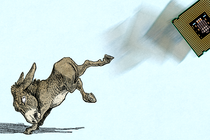
The party once celebrated technology’s potential for innovation—now it’s a villain in campaign ads.

The United States should stand unequivocally with Ukraine against Russia.

Donald Trump has abandoned the Western order.

A poem

The golden age of vibrators is not what it seems.

Long careers spent covering politicians have taught David Brooks and Jeffrey Goldberg the importance of putting politics in its place.

The genetic changes that made the human brain may have made us uniquely vulnerable to Alzheimer’s.

Many Americans have decided that their country’s problem is that it has too many police officers. In fact, it has too few.

Elizabeth Holmes was ahead of her time.

Panelists discuss the midterm elections in a special edition of Washington Week With The Atlantic in Austin, Texas.

Those facing the death penalty have a last line of protection: the specialists who find explanations for unthinkable crimes and attempt to convince juries that sometimes guilty people deserve mercy.

The Church has fought the government multiple times to ensure that detained migrants have access to sacraments.
It is not a goal to be reached, but a dream of new freedom deferred.